You're in!
Start at 40+
Thank you for purchasing Start at 40+. Your step-by-step guide is ready for download. Inside you will find seven clear steps to build your first online income by creating your own product and finding buyers on social media. Take your time with each step, and remember: you are building something real. Start with Step One whenever you are ready.
Your complete guide is ready below. Start with Step 1 and work through each step in order. Everything you need, including the tools and resources mentioned inside, is linked right where you need it.
Your guide
-
Step 1
Pick a Problem You Can Solve
In shortHelp you identify what knowledge or experience you already have that other people would pay to learn.
Before you create anything, you need to know what you are selling. The good news is you do not need to be an expert in something complicated. You need to know how to solve one specific problem for one specific type of person.
Think about your life so far. What have you figured out that other people struggle with? Maybe you managed a household budget for decades. Maybe you navigated a difficult career change. Maybe you learned to cook healthy meals quickly, or helped a parent through an illness, or fixed things around the house, or planned travel on a tight budget.
Write down everything you have done that someone else might find hard. Now look at your list and ask: which of these problems do people actively search for help with? A problem people know they have is much easier to sell a solution to than a problem they do not realize exists.
For example, "how to meal plan for one person" is a clear problem. "How to be more mindful" is vague and harder to sell. Your product will be a simple guide, checklist, or template that walks someone through solving this problem.
Keep it small. One problem, one solution, one outcome. Do not try to teach everything you know. The best first product solves one frustrating moment and gives people a clear win.
Action steps- Set a timer for 20 minutes and write down every skill, experience, or solution you have developed in your life.
- Circle the three problems on your list that you enjoyed solving or that helped someone else in the past.
- Search each circled problem on a social media platform to see if people are asking questions about it.
- Pick the one problem where you found the most questions and where you feel confident explaining the answer.
- Write one sentence describing who has this problem and what your solution helps them achieve.
-
Step 2
Build Your Simple Digital Product
In shortShow you how to create a small, sellable digital product without expensive software or design skills.
A digital product is simply a file you create once and sell over and over without shipping anything. The simplest types are a PDF guide, a printable checklist, a spreadsheet template, or a short video walkthrough. For your first product, choose the format that matches your problem best.
If you are teaching a step-by-step process, a PDF guide with clear instructions works well. If you are helping people organize something, a printable template or spreadsheet is perfect. You do not need to buy expensive design software.
Free tools can create clean, professional-looking products. The key is clarity, not perfection. Your buyer wants the result, not fancy graphics. Start by outlining your solution in simple steps. What does someone need to do first, second, third?
Write each step as if you are explaining it to a friend who knows nothing. Use short sentences. Break up long paragraphs. Add bullet points where it helps. If you are making a template, create the actual file someone would fill out or use.
Test it yourself to make sure it works. Once your content is complete, save it as a PDF if it is a document, or in its native format if it is a spreadsheet or template. Your product does not need to be long.
Many successful first products are 10 to 30 pages, or a single useful template. What matters is that someone who uses it gets the result you promised.
Action steps- Choose your product format: PDF guide, checklist, template, or short video based on your problem.
- Write a simple outline of every step someone needs to follow to get the result.
- Create your product using a free tool, writing or building each section from your outline.
- Use your own product or walk through it mentally to check for confusing gaps or missing steps.
- Save your finished product in a format your buyer can easily open and use.
Recommended Resource
- Product Creator
Let AI build your entire product from start to finish.
-
Step 3
Set Up Your Simple Sales System
In shortCreate a basic automated way for people to buy your product without you handling each sale manually.
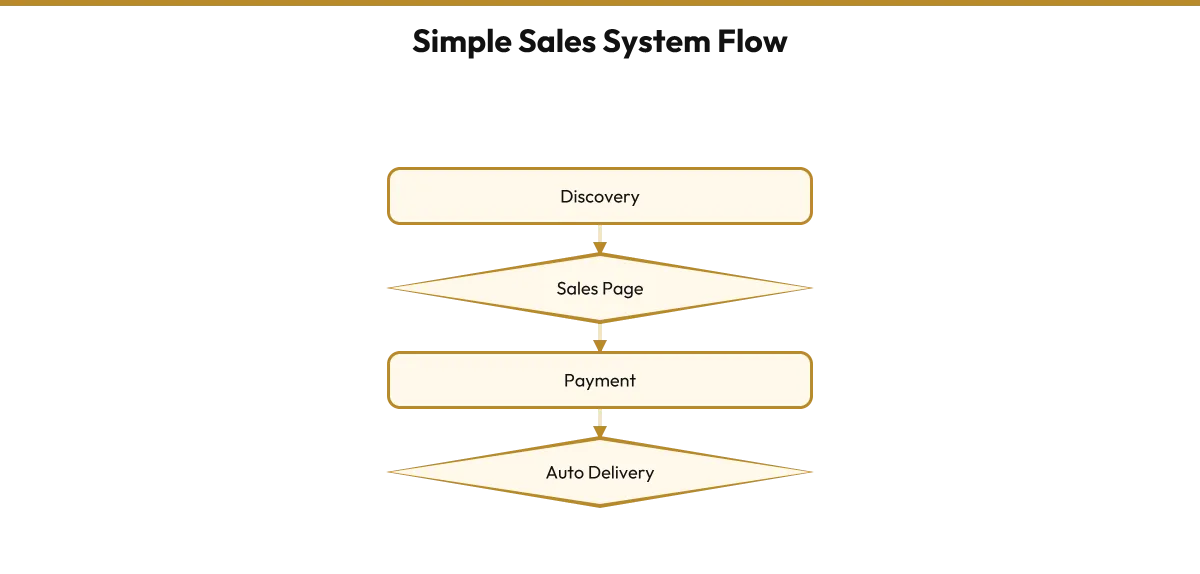
A sales system, sometimes called a funnel, is just the path a buyer follows from discovering your product to receiving it after purchase. You need three simple pieces: a page that describes your product, a way to collect payment, and a way to deliver the file automatically.
You do not need a full website. Many simple tools let you create a single sales page and connect it to payment collection in one place. Look for a service that handles both the page and the payment processing.
This keeps things simple and means you only learn one system. Your sales page needs a clear headline stating the problem you solve, a brief description of what your product includes, who it is for, and what result they will get.
Add the price and a button to buy. That is enough for your first version. For payment, connect a service that lets buyers pay by card. The money typically goes to your bank account after a short processing period.
Check what options are available in your country, as services vary by location. For delivery, set up an automatic email that sends your product file immediately after purchase. Test this yourself by buying your own product with a different email address.
Make sure the file arrives, opens correctly, and matches what you promised. This entire system can be set up in an afternoon once you choose your tool. Do not overthink the design. Simple and working beats fancy and broken.
Action steps- Research simple all-in-one tools that let you build a sales page, take payments, and deliver digital files automatically.
- Choose one tool and create your account, following their setup guide for beginners.
- Write your sales page: headline, problem, solution, what is included, price, and buy button.
- Connect your payment method and verify it works in your country.
- Upload your product file and set up automatic delivery by email after purchase.
- Test the complete purchase process yourself from start to finish.
Recommended Resource
- Your Marketing Software
Get started with this free marketing software
-
Step 4
Choose Where to Find Your Buyers
In shortSelect one or two social media platforms where people who need your product already spend time.
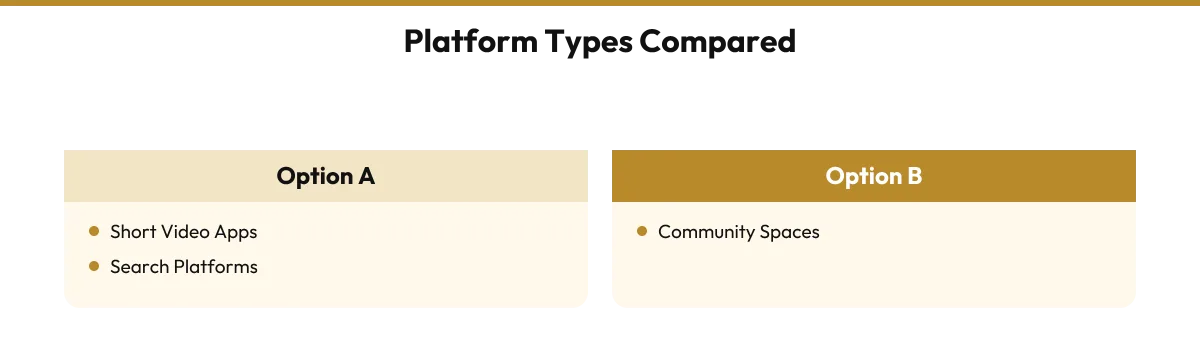
You do not need to be everywhere online. You need to show up consistently in one or two places where your specific buyers already look for help. The main platforms to consider are short video apps where people discover new content, search-based platforms where people actively look for solutions, and community spaces where people gather around specific interests.
Think about your buyer. If they are looking for quick tips and inspiration, short vertical videos on apps like TikTok, Instagram Reels, or YouTube Shorts work well. These platforms show your content to people who do not follow you yet, which is ideal when you are starting with no audience.
If your buyer actively searches for how-to information, longer videos on YouTube or visual pins on Pinterest can bring people to you over time through search. If your topic involves community or ongoing support, a Facebook Group or similar community space might fit.
For most beginners, start with one short-video platform and optionally add one search platform. Short video builds awareness fastest. Search content brings steady visitors over time. You do not need to show your face if you prefer not to.
Many creators use screen recordings, simple graphics with voiceover, or text-on-video formats. The key is sharing useful, specific content related to your product topic, not just talking about your product.
Action steps- Describe your ideal buyer in one sentence: their age, situation, and what they are struggling with.
- List where this person likely spends time online for entertainment and where they search for help.
- Pick one primary platform for short-form discovery content and optionally one for search-based content.
- Create your account and spend 30 minutes browsing content in your topic area to understand what already works.
- Choose your content format: face-to-camera, screen recording, voiceover with graphics, or text-on-video based on your comfort level.
-
Step 5
Create Content That Attracts Buyers
In shortProduce simple, helpful posts and videos that make people trust you and want your solution.
Your content has one job: help someone with a small piece of their problem so they believe you can help with the rest. Every post or video should teach one useful thing, answer one common question, or show one quick win related to your product topic.
Do not talk about your product in every post. Lead with generosity. If you sell a meal planning guide, share a five-minute meal prep tip. If you sell a budget template, explain one common budgeting mistake. If you sell a guide to talking to doctors, share one phrase that gets better results.
This builds trust without feeling salesy. For short videos, aim for 30 to 90 seconds. Hook attention in the first three seconds by stating the problem or promising the tip. Deliver the value quickly. End with a simple next step, like following for more tips or checking your profile for a related resource.
Post consistently. One piece of content per day is ideal when starting. If that feels like too much, start with three per week and build up. Batch your creation: film or write several pieces in one session, then schedule them to post automatically.
Repurpose everything. One video can become a text post, a graphic, or an email. You are not starting from scratch each time. Track which topics get the most response. Do more of those. Your content is the path that leads people to your sales page.
Make it genuinely useful and your buyers will find you.
Action steps- List 20 common questions or small problems your buyer faces related to your product topic.
- Create your first five pieces of content, each answering one question or giving one tip.
- Film or write using your chosen format, keeping each piece focused on one clear takeaway.
- Schedule your content to post consistently using free scheduling tools or manual posting at the same times.
- Check responses after one week and note which topics get the most comments, shares, or saves.
- Plan your next batch of content based on what resonated most.
-
Step 6
Turn Interested People Into Buyers
In shortMove people from enjoying your free content to purchasing your product through simple, natural invitations.
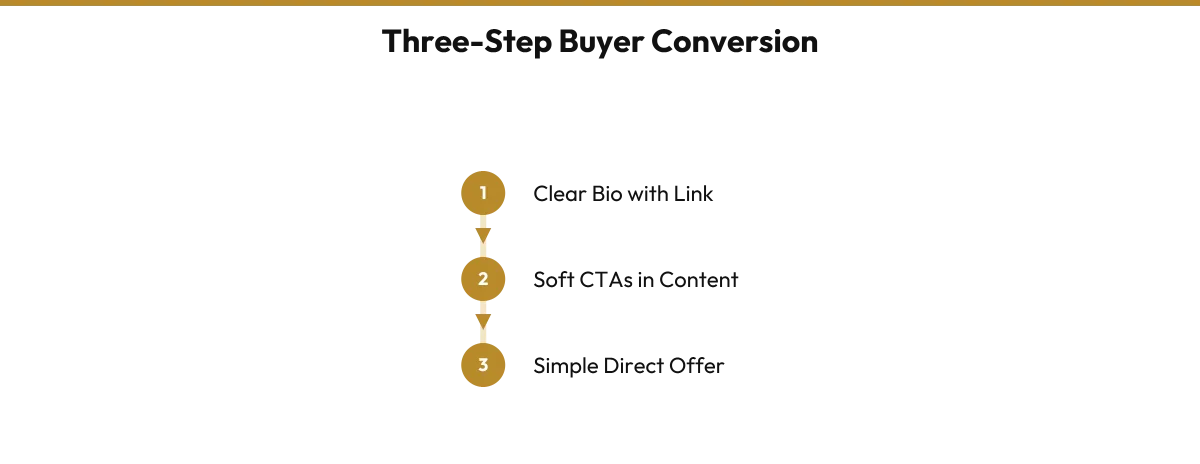
When someone watches your videos or saves your posts, they are signaling interest. Your job is to make it easy for them to take the next step without feeling pressured. There are three simple ways to do this.
First, your profile or bio should clearly state what you help people with and include one link to your sales page. Update this link whenever you are promoting something specific. Second, about one in every four or five pieces of content can directly mention your product.
Not a hard sell. Simply explain who it is for and what problem it solves. For example: "If you want the full step-by-step system, I put everything into a simple guide. Link in my profile." Third, use a simple free resource to collect email addresses.
This is called a lead magnet. It is a small, valuable piece of content you give away in exchange for an email address. Someone who downloads your free checklist is clearly interested in your topic. You then send a few helpful emails and invite them to buy your full product.
This works because people rarely buy the first time they hear about you. The lead magnet lets you stay in touch and build more trust. Your emails should be short, helpful, and personal. Share one tip per email.
After two or three value emails, mention your product naturally. Do not overcomplicate this. One profile link, occasional direct mentions, and a simple email sequence are enough to turn followers into buyers.
Action steps- Write a clear one-sentence bio that states who you help and what result you offer, with your sales page link.
- Create a simple free lead magnet: a one-page checklist, quick-start guide, or template related to your product.
- Set up a simple email collection form that delivers your free resource automatically.
- Write three short welcome emails: introduction, one valuable tip, and a soft invitation to your product.
- Plan which of your regular content pieces will include a natural mention of your product or free resource.
- Review your profile, content plan, and email sequence to ensure the path from stranger to buyer is clear and simple.
-
Step 7
Keep Going and Make It Better
In shortEstablish habits for consistent action, simple tracking, and gradual improvement based on what actually works.
Your first sale is a milestone, not the finish line. The people who succeed treat this as an ongoing practice, not a one-time project. Build a simple weekly routine. Set aside specific hours for content creation, responding to comments and messages, checking your sales, and improving your product or sales page.
Consistency matters more than intensity. One hour per day every day beats eight hours once per week. Track a few basic numbers. How many pieces of content did you post? How many people visited your sales page? How many bought?
You do not need fancy tools. A simple spreadsheet or even a notebook works. Look for patterns. Which content topics bring the most visitors? Which sales page wording makes more people buy? Which emails get opened most? Make one small improvement per week based on what you learn.
Rewrite your headline. Test a different price. Add a testimonial once you have one. Create a second product for people who loved the first. The key is to keep moving. Many people quit before the results show up because they expected instant success.
Building income online is like building any business: it compounds over time. Your first buyer proves the system works. Your tenth buyer shows you are finding your rhythm. Your hundredth buyer means you have built something real. Stay patient.
Stay consistent. Keep helping people solve their problems. The income follows naturally.
Action steps- Block out specific hours in your calendar each week for content creation, engagement, and business review.
- Create a simple tracking sheet with four columns: date, content posted, sales page visits, and sales made.
- Review your numbers weekly and identify one pattern: your best-performing content topic, traffic source, or sales page element.
- Make one small improvement to your sales page, content, or product each week based on your review.
- Set a personal milestone goal for your first month, such as publishing 20 pieces of content or making your first sale.
- When you reach a milestone, celebrate briefly, then set the next one to maintain momentum.
Recommended Resource
- Free Online Earning Skool
Join my free school and learn exactly how to earn online we're
Keep this page handy. Bookmark this page so you can come back to your product and downloads anytime.
Resources and Recommended Tools
- Product Creator
Let AI build your entire product from start to finish.
- Free Online Earning Skool
Join my free school and learn exactly how to earn online we're
- Your Marketing Software
Get started with this free marketing software
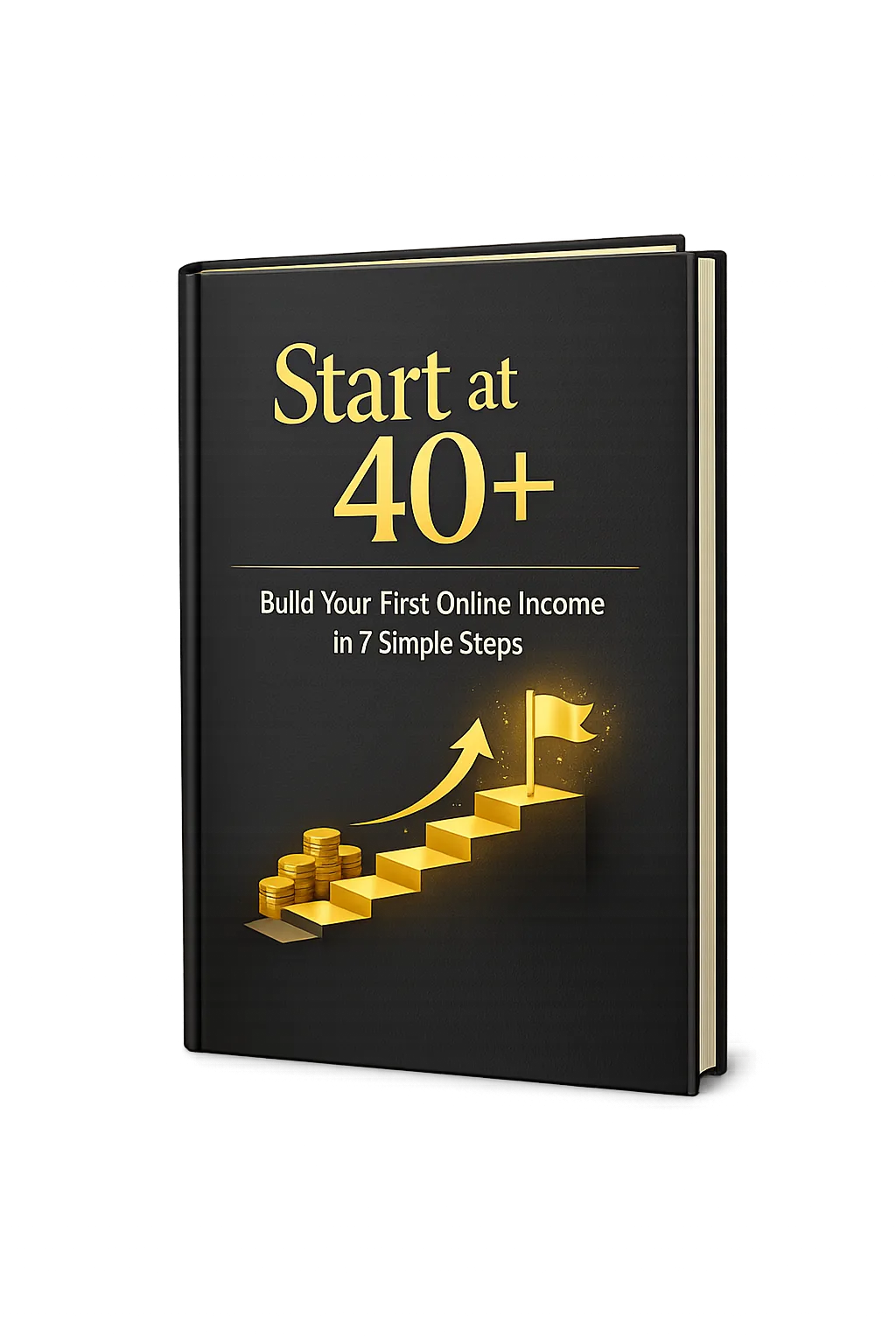
Prefer an offline copy?
Start at 40+
Build Your First Online Income in 7 Simple Steps
Step-by-Step Guide · Downloadable PDF