You're in!
AI Prompts for Extra Income
Thank you for your purchase. Your guide is ready for download. Start with Step 1 and work through at your own pace. If you get stuck, reread the section and run the exact prompt provided. You have everything you need to begin.
Your complete guide is ready below. Start with Step 1 and work through each step in order. Everything you need, including the tools and resources mentioned inside, is linked right where you need it.
What's inside
8 Steps
- Step 01Set Up Your Free AI Tools
- Step 02Choose What You Will Sell
- Step 03Create Your First Sellable Item with AI
- Step 04Find People Who Want What You Made
- Step 05Make Content That Brings Visitors to You
- Step 06Turn Interest Into Email Conversations
- Step 07Write Messages That Make Sales
- Step 08Scale What Works and Fix What Does Not
Your guide
-
Step 1
Set Up Your Free AI Tools
In shortGet you logged into the AI tools you will use for every remaining step, with zero cost and no confusion.
Before you create anything to sell, you need your tools ready. Think of this like gathering your kitchen equipment before cooking. The two AI tools you will use are completely free and require only an email address.
The first tool is called ChatGPT. It is made by a company called OpenAI. Go to chat.openai.com and click sign up. Use any email address you already have. You will receive a confirmation email. Click the link inside to verify.
Then log in. You now have access to a powerful AI that can write, research, and brainstorm with you.
The second tool is called Claude. It is made by a company called Anthropic. Go to claude.ai and sign up the same way. Claude is especially good at longer writing tasks and thinking through business decisions. Having both tools gives you two perspectives on every prompt you run.
When you first log into each tool, you will see a simple box where you type. That box is called the prompt field. Everything you type there is called a prompt. The AI reads your prompt and responds.
Test each tool right now. Type this exact sentence into ChatGPT: "Explain what a digital product is in simple terms." Read the response. Now type the same sentence into Claude. Notice how the answers differ slightly. This is normal and useful.
You will learn which tool you prefer for which tasks.
Do not pay for upgraded versions yet. The free versions handle everything in this guide. Upgrade only after you are earning and only if you choose to.
Action steps- Create your free ChatGPT account at chat.openai.com
- Create your free Claude account at claude.ai
- Run the test prompt in both tools to confirm they work
- Bookmark both sites in your browser for easy access
Recommended Resource
- Go Faceless on Social Media
Make Your Own AI Cash Clone
-
Step 2
Choose What You Will Sell
In shortHelp you pick a specific, sellable offer that matches your life experience and does not require creating something from scratch.
You need something to sell before you can make money. The good news: you do not need to invent anything new. You have decades of life experience that younger people lack. That experience is valuable. You simply need to package it in a form people can buy online.
There are three types of offers this guide covers. You will pick one to start.
First, digital products. These are files people download after paying. Examples include a short guide about something you know well, a checklist for a process you have mastered, or a collection of templates. You create these once and sell them repeatedly.
A digital product costs nothing to deliver.
Second, software subscriptions. These are tools people pay for monthly. You do not build the software. You recommend software others built, and when someone subscribes through your special link, you receive ongoing payments. This is called affiliate marketing for recurring software.
The company handles everything. You simply connect people to the tool.
Third, affiliate products. These are other people's products you recommend for a one-time commission. When someone buys through your link, you receive a percentage. You never handle inventory, shipping, or customer service.
To choose, ask yourself this question: what do people already ask my advice about? Gardening on small balconies? Managing medications? Fixing household problems? Navigating Medicare or retirement systems? Teaching grandchildren? Budget travel?
Your answer reveals your starting topic. Pick the one that feels easiest to talk about. You are not committing forever. You are choosing your first step.
Action steps- List three topics people regularly ask your advice about
- Pick the one that feels easiest to explain to a stranger
- Decide whether to start with a digital product, software subscription recommendation, or affiliate product
- Write your choice down where you will see it daily
Recommended Resource
- Product Creator
Don't Know What To Sell? Make Your Own Product With Just An Idea.
-
Step 3
Create Your First Sellable Item with AI
In shortUse exact AI prompts to create a simple digital product you can sell within days, even if you have never made one before.
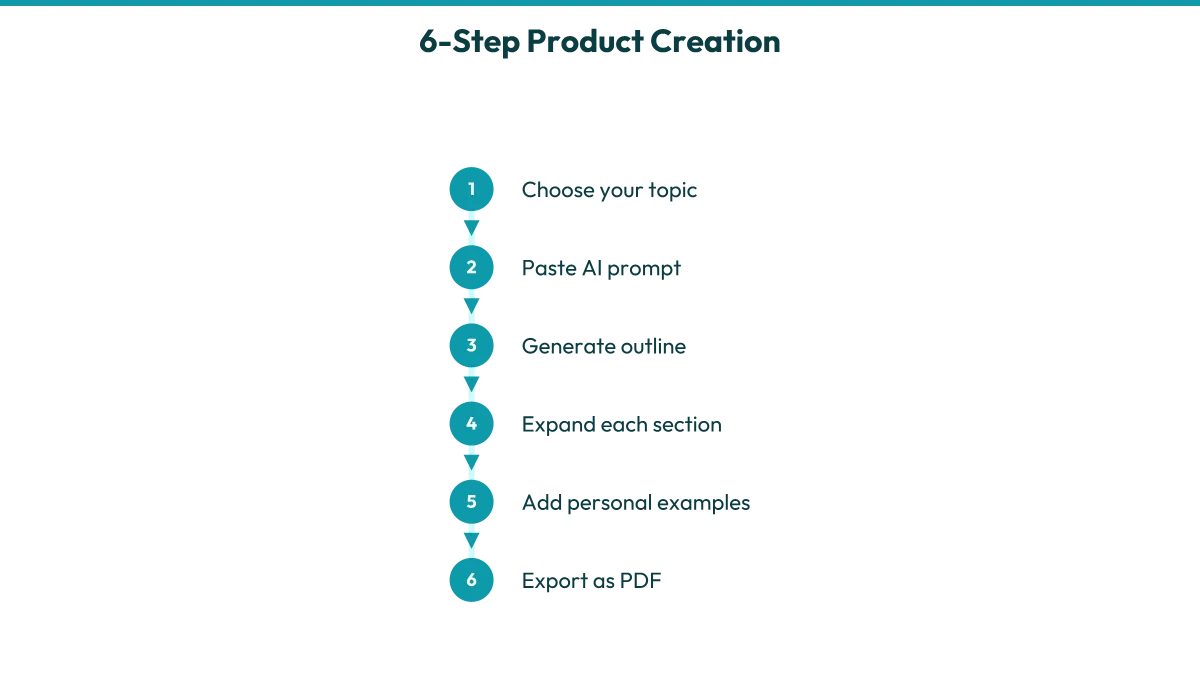
You will now create something you can actually sell. The simplest first product is a short, useful guide. Think seven to fifteen pages. Long enough to solve one specific problem. Short enough that you finish it this week.
Here is how to create it using AI. Open ChatGPT. Copy and paste this exact prompt, filling in the brackets with your topic:
Copy this promptI am creating a short guide for [describe your audience, such as people over 60 who want to garden in small spaces]. The guide will solve this specific problem: [describe the problem, such as growing vegetables on a balcony with limited sunlight]. Please create a detailed outline for a 10-page guide. Each page should cover one clear step. Include practical tips I might not think of. Write in a warm, helpful tone.
Read the outline. If something feels missing or off, tell the AI: "Add a section about [topic]" or "Make the tone more encouraging for beginners." The AI adjusts. This back-and-forth is called refining your prompt.
Once the outline looks good, use this prompt:
Copy this promptNow write the complete guide following that outline. Make each section two to three paragraphs. Include one specific example in every section. End each page with one clear action the reader can take today.
The AI writes your first draft. It will not be perfect. Read it aloud. Mark spots that sound robotic or confusing. Then prompt:
Copy this promptRewrite section [number] to sound more conversational, like advice from a knowledgeable friend.
Save your finished guide as a PDF. Most computers can print to PDF from any document. This is your product.
Action steps- Run the outline prompt in ChatGPT with your specific topic
- Review and refine the outline through conversation with the AI
- Run the complete draft prompt
- Read aloud and identify three spots needing revision
- Run revision prompts for those spots
- Save your finished guide as a PDF
-
Step 4
Find People Who Want What You Made
In shortShow you how to discover where your potential buyers already gather online, without guessing or wasting time on the wrong platforms.
You have something to sell. Now you need people who want it. The mistake most beginners make is shouting into empty rooms. You will do the opposite. You will go where your buyers already talk to each other.
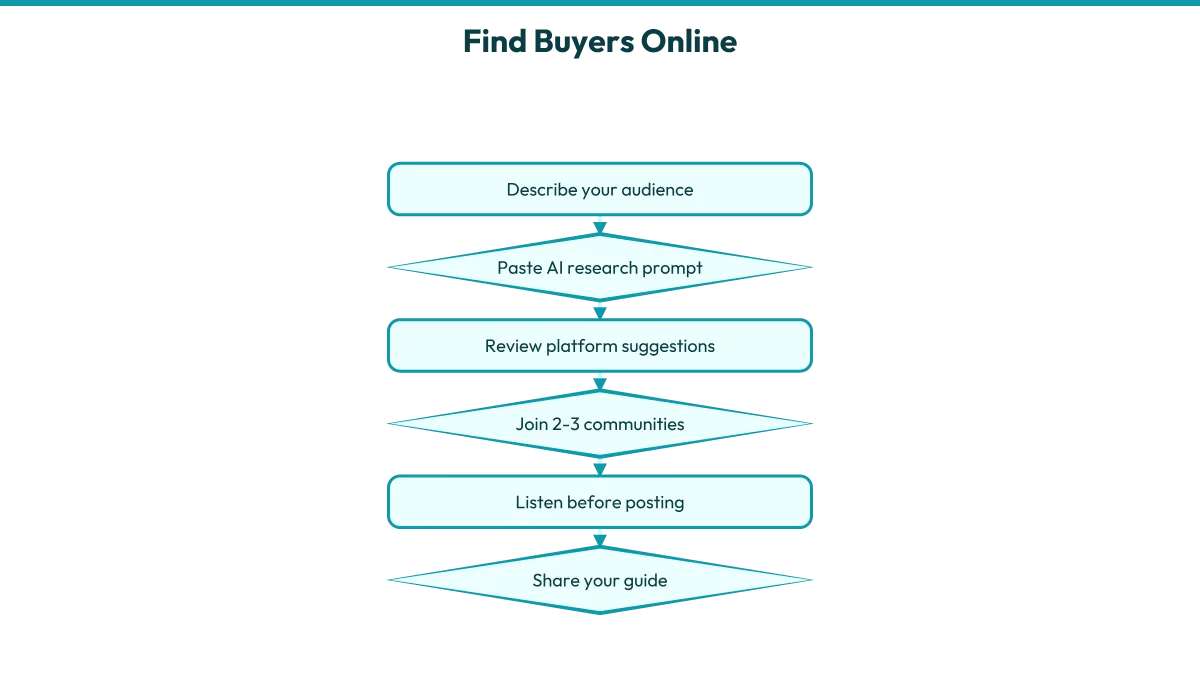
Start with AI research. Open Claude. Paste this prompt:
Copy this promptMy guide helps [describe your audience] solve [describe the problem]. Where do these people already gather online? List specific Facebook groups, Reddit communities, forums, YouTube channels they watch, and newsletters they read. For each place, note whether they go there to ask questions, share wins, or complain about problems.
Study the list. Look for places where people ask questions or complain. Those spots signal active need. People asking questions are close to buying solutions.
Now verify one place yourself. If Facebook groups appear on your list, search Facebook for those group names. Click into them. Read recent posts. Do people sound like your audience? Are they discussing your topic? If yes, join the group and read without posting for three days.
Learn how people talk. Notice which posts get many comments.
If Reddit appears, search your topic on reddit.com. Read threads from the past month. Note the exact words people use to describe their problem. These words become your headlines later.
You are not selling yet. You are listening. This research prevents you from creating content nobody wants. It also shows you what language resonates with real people, not what you assume they care about.
Pick two places to focus on. Not five. Not ten. Two. Depth beats scattered effort.
Action steps- Run the research prompt in Claude
- Review the list and mark places where people ask questions or express frustration
- Join or visit your top two places and read silently for three days
- Write down ten exact phrases your audience uses to describe their problem
- Confirm your two chosen places feel active and aligned with your topic
-
Step 5
Make Content That Brings Visitors to You
In shortUse AI to create simple, effective content that attracts interested people without paid advertising or showing your face.
You need a way for strangers to find you. The most reliable free method in 2026 is short helpful videos, text posts with genuine value, and simple images that solve small problems. You do not need to appear on camera.
You do not need fancy equipment.
The strategy is simple. Create one piece of content that answers one specific question your audience asks. End it with a gentle invitation to learn more. Repeat consistently.
Let AI do the heavy creation work. Open ChatGPT. Use this prompt:
Copy this promptMy audience is [describe them]. They struggle with [specific problem]. Give me 10 ideas for short content pieces I could make. Each should answer one real question or solve one tiny problem. For each idea, suggest the format: talking text video, screen recording, simple image with text overlay, or written post.
Pick your favorite three ideas. For the first, use this prompt:
Copy this promptWrite a 60-second video script about [your chosen topic]. The hook should address this specific pain point: [exact phrase from your research]. The middle should give one genuinely useful tip. The end should say where to find more help, without being pushy. Write it conversationally.
To make the video without showing your face, use your phone's screen recording or free tools that turn text into spoken video. Many free apps do this. Search your phone's app store for "text to video" and try two.
Pick the one that feels easiest.
For written posts, paste the script directly into Facebook groups, Reddit, or other communities where your audience gathers. Add a genuine comment like "This helped me, hope it helps someone else" rather than promotional language.
Post three times per week minimum. Consistency builds trust faster than perfection.
Action steps- Run the 10 content ideas prompt
- Select your top three ideas
- Run the video script prompt for your first idea
- Create and publish your first piece of content this week
- Schedule three content creation sessions for next week
- Track which piece gets the most response
Recommended Resource
- AI Affiliate Marketing Skool
Join My Free Community on Skool to Learn More
-
Step 6
Turn Interest Into Email Conversations
In shortBuild a simple, free system to collect contact information from interested people so you can follow up without relying on social media algorithms.
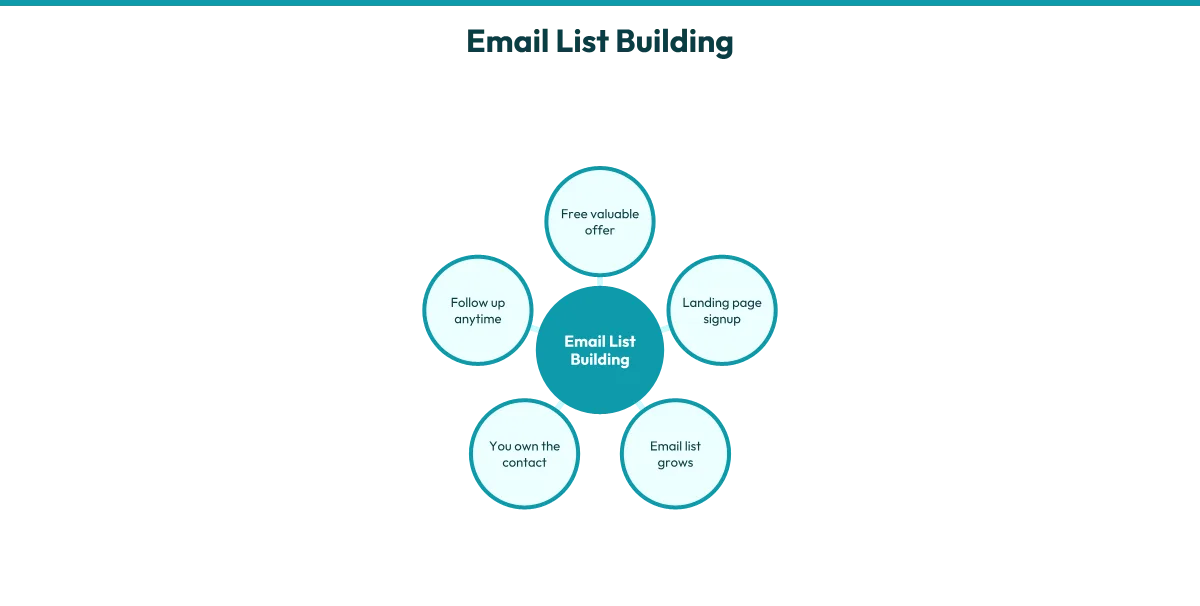
Social media platforms control who sees your content. An algorithm is simply the computer rules that decide what shows up in someone's feed. You cannot control it. What you can control is your own email list. An email list is a collection of addresses from people who said yes to hearing from you.
It is the most reliable asset in online business.
Your goal is simple: offer something free and valuable in exchange for an email address. This free item is called a lead magnet. It should relate directly to your paid product.
If your paid guide is about balcony gardening, your lead magnet might be "The 5 Vegetables That Grow in Shade: A Quick Starter Checklist." It solves one small piece of the bigger problem.
Create your lead magnet with AI. Prompt ChatGPT:
Copy this promptCreate a one-page checklist called [your title]. Make it practical and specific. Include 5-7 items with one sentence of explanation each. Format it so it looks good printed or on screen.
To collect emails, you need a simple form. Free options exist from several companies. Search for "free email form builder" and compare two. Look for one that lets you create a landing page. A landing page is a simple single web page with one purpose: get someone to enter their email.
Your landing page needs three things only: a headline stating the problem you solve, a bullet list of what they receive, and the form. Create the page text with this prompt:
Copy this promptWrite landing page copy for a free checklist called [title]. Headline should speak to [specific pain point]. Include three bullets about what they will learn. End with a simple call to action: enter your email to receive it.
Share your landing page link in your content. Never send people directly to a sales page first. The free offer builds trust. Trust leads to sales.
Action steps- Decide on a lead magnet topic directly related to your paid product
- Run the lead magnet creation prompt
- Choose and set up a free email form tool
- Run the landing page copy prompt
- Build your simple landing page
- Add your landing page link to your next three pieces of content
Recommended Resource
- Systeme IO Marketing Suite
Get Your Free Marketing Software and Email Autoresponder
-
Step 7
Write Messages That Make Sales
In shortUse AI to create honest, effective follow-up emails and sales messages that feel helpful rather than pushy.
You now have interested people's email addresses. The next step is inviting them to buy your product. Most beginners either never ask or ask too aggressively. You will do neither. You will send helpful messages that naturally lead to your offer.
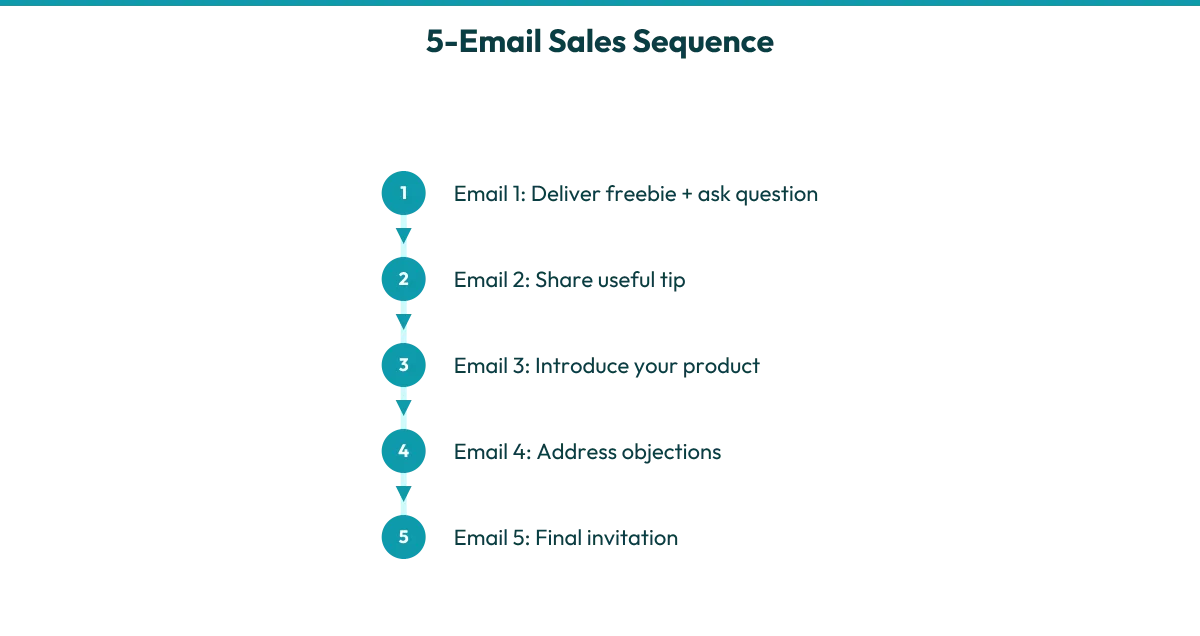
The sequence is simple. First email: deliver your free lead magnet and ask one question about their situation. Second email: share a useful tip related to your topic. Third email: tell a brief story about why you created your product, then mention it is available.
Fourth email: answer a common objection or question about buying. Fifth email: remind them the offer exists with a simple deadline if you choose to use one.
Write these with AI assistance, but add your real voice. Open Claude. Use this prompt for your first email:
Copy this promptWrite a welcome email for someone who just downloaded my free checklist about [topic]. The tone should be warm and from a real person. Deliver the checklist. Ask this question: [relevant question about their situation]. Keep it under 200 words.
For your sales email, use this prompt:
Copy this promptWrite an email telling the story of why I created a guide about [topic]. Mention one specific frustration I noticed in my research. Then say the guide is now available and who it is best for. Include a simple link to purchase. No hype or pressure. Under 250 words.
Send emails two to three days apart. Track which ones get replies. Replies mean engagement. Engagement leads to sales even when direct purchases do not happen immediately.
Never buy email lists. Never add people without permission. These practices hurt your reputation and often violate laws that vary by location. Check the rules where you live.
Action steps- Run the welcome email prompt and customize with your details
- Run the sales story email prompt
- Schedule your five-email sequence in your email tool
- Send the first email within 24 hours of someone joining your list
- Track replies and adjust future emails based on what people ask about
-
Step 8
Scale What Works and Fix What Does Not
In shortTeach you to read simple signals from your efforts, double down on successful content, and adjust failed approaches without emotional decisions.
Not everything you try will work immediately. Some content will attract visitors. Some will be ignored. Some emails will get replies. Some will be deleted unread. This is normal. The key is reading signals correctly and responding with small adjustments rather than dramatic changes or giving up.
A signal is any measurable response. On social content, signals include views, comments, shares, and clicks to your landing page. In email, signals include open rate, which is the percentage of people who open your email, and click rate, which is the percentage who click a link inside.
Your email tool shows these automatically.
Once weekly, spend twenty minutes reviewing your numbers. Open your content platforms and email tool. Write down three numbers: total pieces of content posted, total new email subscribers, and total sales. Do this in a simple notebook or spreadsheet.
After three weeks of data, look for patterns. Which content topic got the most engagement? Which email subject line got the most opens? Which landing page traffic source brought the most subscribers? These patterns reveal what your audience prefers.
Use AI to help you interpret and plan. Prompt Claude:
Copy this promptHere is my data for the past three weeks: [list your numbers]. What patterns do you see? What should I do more of? What should I adjust or stop? Suggest three specific experiments for next week.
An experiment is a small test. Try one new thing while keeping what works. If how-to videos perform well, make your next three videos on related topics. If a particular email subject line worked, use a similar approach again.
If something fails three times, stop doing it and try the AI's next suggestion.
Progress comes from consistent small improvements, not dramatic overhauls.
Action steps- Set a weekly 20-minute review appointment with yourself
- Record your three core numbers every week
- After three weeks, run the pattern analysis prompt in Claude
- Implement one experiment based on the AI's suggestions
- Continue your weekly tracking and monthly pattern reviews
Keep this page handy. Bookmark this page so you can come back to your product and downloads anytime.
Resources and Recommended Tools
- AI Affiliate Marketing Skool
Join My Free Community on Skool to Learn More
- Go Faceless on Social Media
Make Your Own AI Cash Clone
- Systeme IO Marketing Suite
Get Your Free Marketing Software and Email Autoresponder
- Product Creator
Don't Know What To Sell? Make Your Own Product With Just An Idea.
Prefer an offline copy?
AI Prompts for Extra Income
A Simple Guide to Earning Online After 50
Step-by-Step Guide · Downloadable PDF